

Taking a Baby on Holiday: The Tiny Passenger With the Biggest Luggage Allowance
Your first holiday with a baby is still a holiday. It just comes with more nappies, less sleep and the sudden belief that forgetting one muslin cloth could bring down the entire operation.
From passports and airport security to feeding, flying, sleep, sunshine and the suitcase that now appears to contain an entire branch of a baby shop.
There is a very specific moment before your first holiday with a baby when you look at the mountain of equipment by the front door and wonder whether you have accidentally agreed to emigrate.
Before children, packing could be wonderfully optimistic. A few T-shirts, swimwear, passport, charger, done. With a baby, you start saying things such as, “Do we need the spare steriliser?” and “How many nappies can one small human realistically use in four hours?”
The good news is that travelling with a baby is usually far less terrifying once you're actually doing it. The trick isn't to create a military operation so complicated that NATO asks for a copy. It's to sort the important things early, keep the travel day simple and accept that your old definition of a relaxing holiday may need a temporary rewrite.
1. Before you book: boring jobs first, holiday excitement second
A baby does not get to travel internationally simply by being extremely cute. Check passport and entry requirements for every person travelling, including your baby, well before you pay for anything non-refundable.
For British children under 16, a child passport is normally required for international travel. If only one parent or another adult is travelling with the child, check whether permission from everyone with parental responsibility is required and what evidence you should carry. Destination rules can differ, so check the official requirements for the country you're visiting as well.
Then think about the holiday itself. A beautiful hillside apartment may lose some of its charm when you're carrying a pushchair up 86 steps. A chic room with a glass balcony and nowhere to warm a bottle may not feel quite as chic at 2:17am.
Consider your baby's routine, but don't chase a mythical “perfect flight”. Babies have a remarkable ability to change the plan.
A short, straightforward transfer can be worth more than another star on the hotel sign after a long travel day.
Ask about cots, lifts, fridges, kettles or bottle-warming options and whether the room genuinely has enough space.
Being able to walk to food, a pharmacy and the beach can make family travel considerably easier.
2. Packing: apparently the baby is staying for six months
The temptation is to pack for every conceivable emergency. A cold evening. A heatwave. A sudden shortage of nappies across southern Europe. An unexpected invitation to a formal dinner hosted by the mayor.
Pack around what would genuinely be awkward to replace on arrival. Medicines or specialist items deserve more thought than the twelfth sleepsuit. Everyday baby supplies are sold in plenty of destinations, although brands and availability vary.
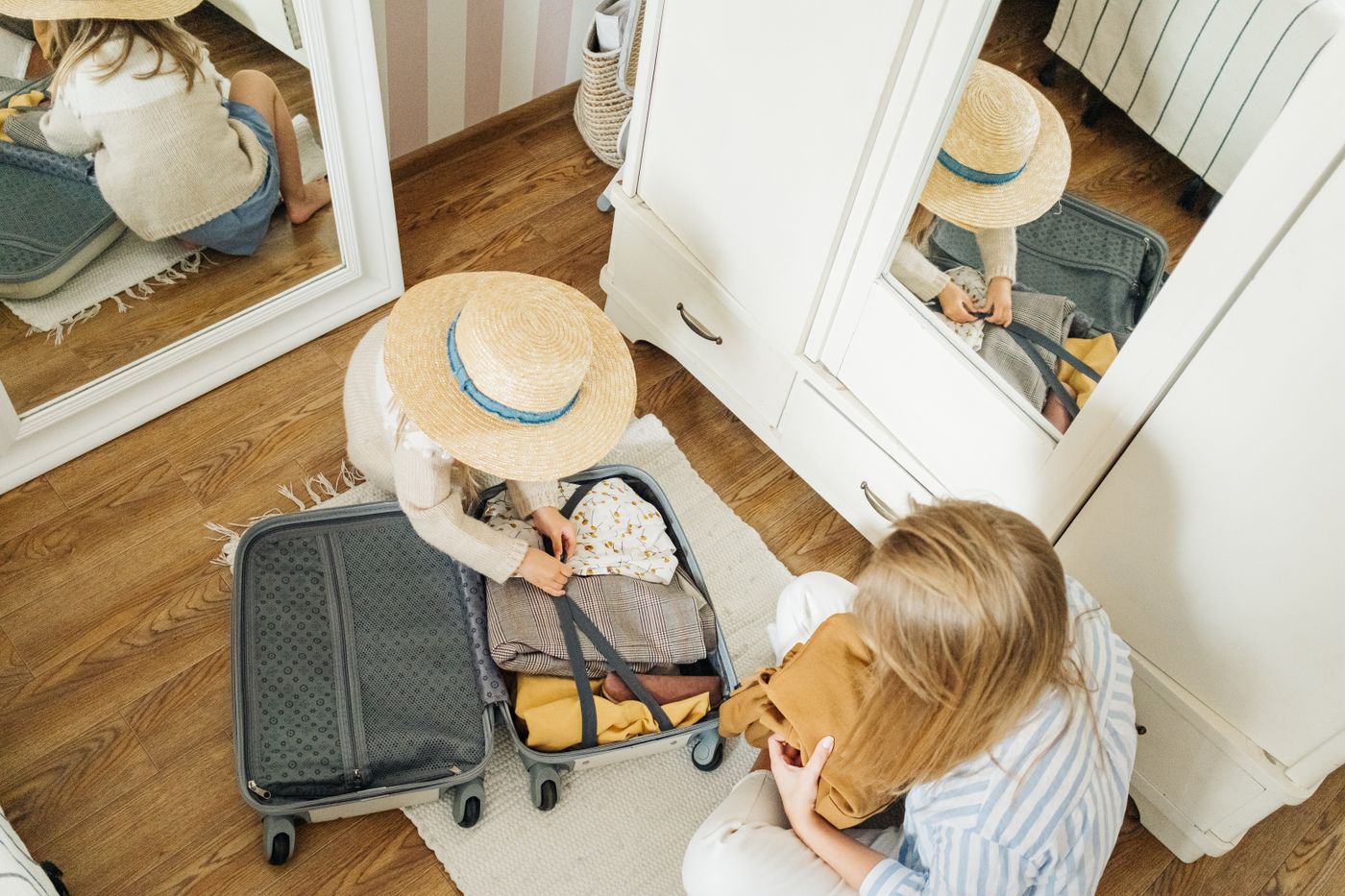
The sensible baby hand-luggage list
- Passports and travel documents
- More nappies than the journey should require
- Wipes and changing mat
- Two changes of baby clothes
- A spare top for the adult — trust us
- Feeds, bottles or baby food as needed
- Muslins / bibs
- Any essential medicines
- Comforter or familiar small toy
- Light layer for a cool aircraft cabin
- Nappy sacks / sealable bags
- A tiny reserve of parental patience
That spare adult top is not a joke. A baby can travel in a pristine outfit while somehow ensuring you spend the next three hours wearing the evidence of breakfast.

3. Airport security with a baby: easier when you know the rules
For departures from the UK, baby food, baby milk and sterilised water needed for the journey have specific security exemptions. Current government guidance says there is no legal limit to the amount needed for the journey, although airports may screen containers and you should check your departure airport before travelling. Breast milk can be carried in hand luggage in containers up to 2,000ml; frozen breast milk cannot be carried in hand luggage.
Don't assume the liquid rules will be identical on your return journey or at a connecting airport. Rules can differ outside the UK, so check both ends of the trip.
UK Government guidance on baby food and baby milk in hand luggage.
At the airport, accessibility beats elegance. Put the things security may want to inspect somewhere you can reach without excavating six layers of nappies and a stuffed giraffe.
4. The flight: abandon the idea of performing parenthood perfectly
You can prepare beautifully and your baby may sleep from take-off to landing. Or they may decide row 18 needs to hear their complete thoughts on aviation.
Neither outcome makes you a better or worse parent.
Feed when you need to feed. Change them when they need changing. Walk around when the seat-belt sign is off and it's safe to do so. Bring a couple of familiar comforts. Most importantly, don't spend the whole flight worrying that everyone is judging you. Most passengers have either travelled with children themselves or are far more interested in their film and tiny bag of pretzels.
5. You landed! Unfortunately, your luggage hasn't unpacked itself
This is where a little planning earns its keep. Know how you're getting from the airport to your accommodation before you land. If you're booking a transfer or hire car, check the arrangements for an appropriate child seat rather than assuming one will simply appear.
Keep the first evening deliberately unambitious. Find the room. Feed everyone. Work out where breakfast is. Locate the nearest shop or pharmacy. Nobody needs an eleven-stop sightseeing itinerary after travelling with a six-month-old.
6. Hotel life: your baby has not read the brochure
You may have booked the room for its sea view. Your baby may spend twenty minutes staring lovingly at the ceiling fan.
That's baby travel in a nutshell.
Try not to recreate home perfectly. Familiar routines can help, but holidays have different light, noise, temperatures and meal times. Keep the bits that matter to your family and allow the rest to bend a little.
Check the cot before using it and think carefully about sleep safety rather than improvising because you're away. NHS guidance says babies should not get too hot and gives 16–20°C as a comfortable room-temperature range for sleeping babies. If you have questions about your own baby's health or sleep, get individual advice from an appropriate healthcare professional.
7. Sunshine is lovely. Babies still need shade.
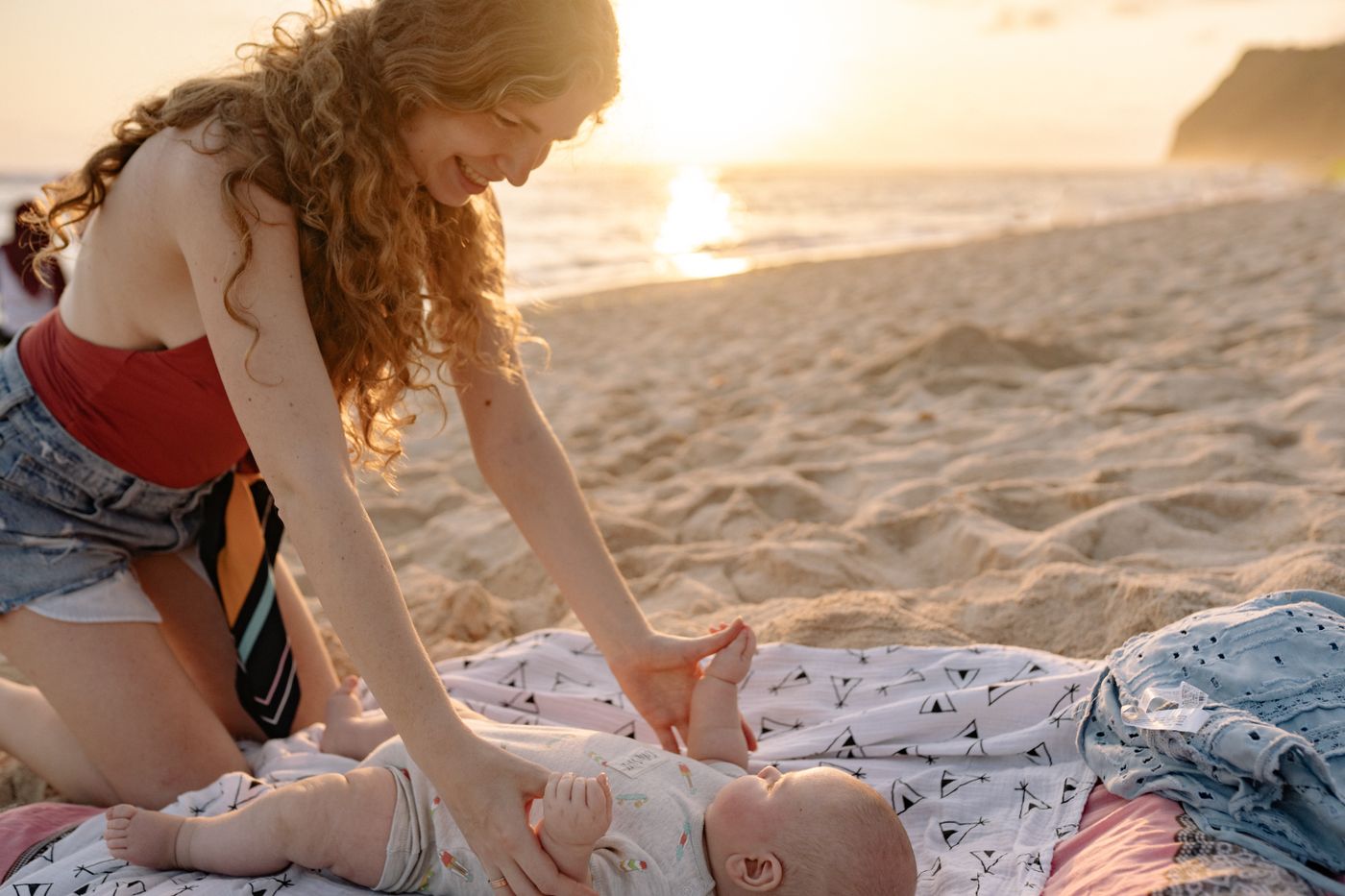
A hot-weather holiday with a baby needs a different rhythm. NHS guidance says babies under six months should be kept out of direct sunlight. It also advises using a parasol or sunshade on the pushchair rather than covering the pram with a blanket, because covering it can contribute to overheating.
For babies aged six months and over, NHS guidance recommends at least SPF 30 sunscreen with UVA and UVB protection, reapplied regularly and after swimming or sweating. Shade, suitable clothing and a sun hat remain important.
Read the NHS advice on keeping babies safe in the sun.
And this is where travelling more slowly becomes a feature rather than a failure. An hour under a parasol, an afternoon nap and an early dinner may not resemble your pre-baby holidays — but watching your child see the sea for the first time can beat a packed sightseeing schedule anyway.
8. The night-before checklist
Before you lock the front door
- All passports physically in the bag
- Boarding passes / booking details accessible
- Travel insurance details saved
- Transfer or parking booking confirmed
- Baby feeding supplies packed
- Essential medicines in hand luggage
- Pushchair / car-seat airline rules checked
- Accommodation address saved offline
- Phone chargers packed
- Emergency clothes easy to reach
- Return-airport baby liquid rules checked
- Favourite comfort item accounted for
The questions parents quietly Google at 11:43pm
Does a baby need a passport to go abroad from the UK?
For a British child travelling internationally, you should check the destination's entry requirements and arrange the appropriate child passport. GOV.UK says British children under 16 use a child passport, which is valid for five years.
Can I take baby milk through UK airport security?
Yes, UK rules provide exemptions for baby food, baby milk and sterilised water needed for the journey. Check the current rules for your departure, transit and return airports because procedures can differ.
Should I take my pushchair to the gate?
Many airlines have arrangements for pushchairs, but exactly where you hand it over and what is included varies. Check your airline's current infant-baggage policy before travelling.
What if my baby cries on the plane?
You deal with what your baby needs, just as you would anywhere else. A crying baby is not evidence that the holiday was a bad idea, and a difficult hour does not define the whole trip.
Is travelling abroad with a baby actually worth it?
Only your family can answer that, but it does not have to resemble your old holidays to be worthwhile. Expect a slower pace, build in flexibility and choose a trip that works for the stage your family is at now.
They won't remember it. You probably will.
Your baby may not remember their first flight, first paddle in the sea or the hotel room you spent three hours researching. You will. The photographs, the tiny sun hat, the ridiculous luggage pile and the moment you realise, somewhere between the airport and the beach, that you actually managed it — those belong to you.
Important: This article is general travel information, not medical or legal advice. Airline, airport, border and health guidance can change. Check your airline, airports, destination authorities, GOV.UK and NHS guidance for your circumstances before travelling.




