
Spain Without the Rookie Mistakes
The funny but genuinely useful guide to airports, tapas, beaches, euros, late dinners and arriving in Spain looking like you have done this before.
Spain is wonderfully easy to love. It is also very easy to get slightly wrong.
You have booked the flight, checked the weather and already pictured yourself beside the Mediterranean holding something cold.
Then Spain introduces you to its own rhythm. Dinner starts later than you expected. The midday sun has absolutely no interest in your confidence. The old town has turned a ten-minute walk into an accidental sightseeing tour, and your plan to spend “hardly anything today” ended three tapas bars ago.
This is not a list of reasons to worry. It is a guide to avoiding the silly mistakes so you can concentrate on the important business of enjoying Spain.
Starting the holiday with a passport panic
Nothing destroys the sophisticated-traveller image faster than reaching the airport and suddenly staring at your passport as though you have never seen it before.

“It expires next year. We're fine.”
Followed by an increasingly serious family discussion beside the check-in desks.
Check the actual Spanish entry rules
For British citizens travelling on a full British passport, Spain applies Schengen passport rules. Check both the issue date and expiry date rather than looking only at the year printed on the front.
For ordinary tourist visits, British citizens can normally visit the Schengen area visa-free for up to 90 days in any 180-day period. Entry rules can change, so check official guidance again before departure.

Assuming every Spanish holiday is basically the same
Spain is not one giant resort with a beach attached. Barcelona, Madrid, Seville, Valencia, the Costa del Sol, Costa Blanca, Balearics and Canary Islands can deliver completely different holidays.
Want beaches and resort convenience? Choose accordingly. Want architecture, museums and late-night city life? A city break may suit you better. Want winter sunshine? The Canary Islands can play a very different role from mainland beach destinations.
Choose the part of Spain for the holiday you actually want, not simply because somebody at work went there last summer.
“We're only going out for a quick walk” is how many excellent Spanish evenings begin.
HolidayIn4U observationTrying to eat dinner while Spain is still thinking about it
Spanish eating times can be later than many British visitors expect. Official Spanish tourism guidance says lunch is commonly served from around 13:00 to 16:00 and dinner from around 20:00 to 23:30.

Arrive for dinner at 5:30pm
You are hungry. The restaurant is technically a building. The kitchen, however, may not yet share your enthusiasm.
Move your food clock a little
Try a later lunch, enjoy tapas or an aperitivo, and make dinner part of the evening rather than something that must happen immediately after the beach.
Underestimating the Spanish sun
There is a particular type of holiday optimism that says: “I'm normally fine in the sun.” Spain has heard this before.
A beach day can feel wonderfully breezy while your shoulders are quietly preparing tomorrow's complaint.
Use suitable high-factor sunscreen, reapply it, drink plenty of water and make use of shade. Plan strenuous sightseeing around the heat rather than treating midday like a personal endurance test.

Letting the euro budget mysteriously disappear
Spain can work brilliantly for different budgets, but little purchases are extremely talented at becoming large totals. Airport breakfast. Taxi. Coffee. Ice cream. Tapas. Another coffee. Beach shop. “Just one drink.” Suddenly your banking app has joined the holiday conversation.
“We've hardly spent anything.”
A sentence traditionally spoken immediately before somebody checks the banking app.
Budget for the boring bits too
Include airport food, local transport, transfers, attractions, tips where appropriate, beach equipment and those small daily purchases rather than budgeting only for hotel and meals.
If a payment terminal offers to convert a euro purchase into your home currency, check the rate and fees before accepting. Your own card provider's terms matter, so know them before travelling.
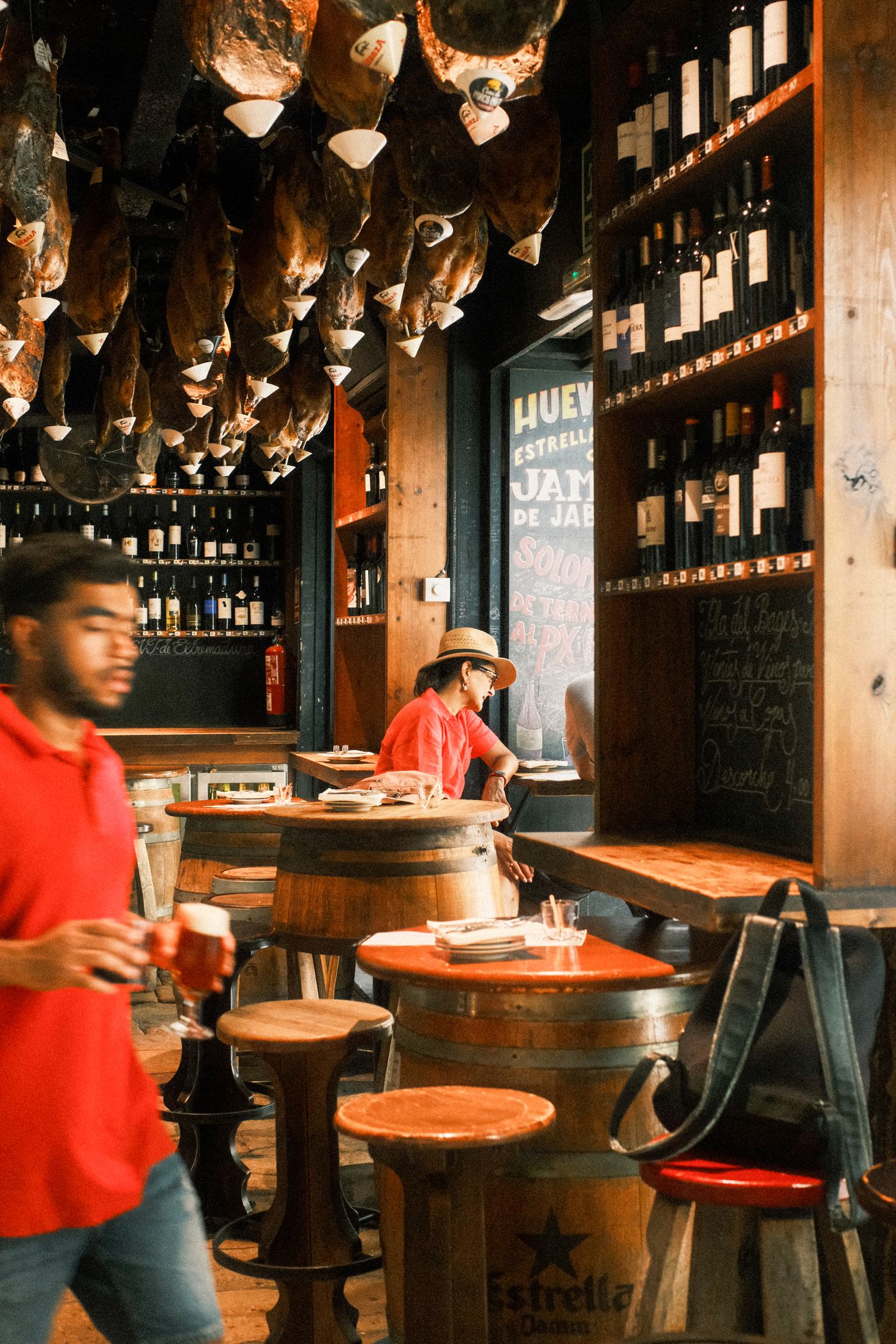
Only eating where the giant laminated menu tells you to
There is nothing wrong with an easy tourist restaurant. Sometimes chips overlooking the sea are exactly what civilisation requires.
But if every meal happens on the same tourist strip, you may miss one of Spain's best bits: discovering local cafes, markets, bakeries, tapas bars and regional dishes.
Walk a street or two away from the busiest attraction, look where local people are eating and try at least one thing you did not arrive in Spain already knowing how to pronounce.
Assuming the airport-to-hotel bit will sort itself out
You have landed in Spain. Everyone applauds internally. Now comes the underrated part of the trip: actually reaching where you are staying.
“We'll just get something when we land.”
Forty minutes later, four people are standing beside three suitcases debating which taxi queue looks more official.
Know your first journey
Before departure, compare airport bus, rail, authorised taxi, shared transfer, private transfer and car hire where relevant. Save the hotel address offline too.
Large cities have extensive public transport and Spain also has major rail and high-speed rail networks. For taxis, official Spanish tourism advice recommends using authorised vehicles and keeping your destination address handy.
The quickest way to discover how large a Spanish old town really is is to drag a suitcase through it.
HolidayIn4U travel truthThinking every shop follows your timetable
Opening hours vary by location and season. Spain's official tourism information says shops commonly open around 10:00 to 21:00, while some close during the afternoon, particularly in summer. Sunday is also a common closing day, although tourist areas and major cities can differ.
If you urgently need medicine, groceries, a particular shop or attraction, check its actual opening hours rather than relying on what you remember from another Spanish destination.
Hiring a car before deciding whether you need one
A hire car can be brilliant for rural areas, islands, hidden beaches and multi-stop trips. In a busy city centre it can also become an expensive object you spend the week trying to park.
Choose transport around the trip. Not every Spanish holiday needs a car, and not every Spanish holiday works best without one.
Check licence requirements, insurance, deposit, fuel policy, parking at your accommodation, tolls and any local access or emissions restrictions relevant to your route.

Six phrases worth having in your pocket
You do not need perfect Spanish. A few polite words can make everyday travel considerably easier.
Leaving healthcare planning until somebody needs it
Nobody wants healthcare to be part of a holiday article. Unfortunately, nobody wants to search for this information from a hotel room after an accident either.
A valid UK GHIC or eligible EHIC can provide access to medically necessary state healthcare in Spain under the applicable rules, but it is not a replacement for travel insurance. Travel insurance can cover things those cards do not, including some repatriation and other travel costs.
The Spain Rookie-Proof Checklist
The best way to do Spain properly is to stop trying to do absolutely everything
Spain rewards travellers who leave some space in the itinerary. Have the important things organised: documents, insurance, airport transfer, accommodation and the essentials.
Then give yourself permission to sit in a square longer than planned, order another plate, wander down the street that was not on the itinerary and discover why the “quick evening walk” took three hours.
That is not the holiday going wrong. That may be the bit you came for.
Entry, health and local rules can change. Before travelling, check the latest Spain travel advice from the UK Government and practical information from Spain's official tourism portal.




