

When Your Suitcase Takes Its Own Holiday
What to do when checked luggage is delayed, damaged or missing abroad, from the empty carousel to the final claim.
The carousel stops. Everyone else has collected their case. A lonely plastic crate circles past for the fourth time, and you are beginning to suspect your suitcase has gone to a much nicer destination than you.
Losing a bag at the start of a holiday is frustrating, especially when the toothbrush, the sun cream and every sensible pair of shoes are inside it. The good news is that you can take useful steps straight away. I have put them in the order I would want to read them while standing in arrivals with one hand luggage bag and a rapidly shrinking sense of humour.
Before you leave baggage reclaim
First check the flight information screens and the nearby belts: large bags, pushchairs and sports equipment sometimes arrive at a separate collection point. Ask the baggage desk whether the carousel is finished and whether your bag was routed to a different area. If you had a connection, have all flight numbers ready.
If the bag still is not there, go to your airline’s baggage service desk before leaving the arrivals area. Airport and airline arrangements vary; when in doubt, ask which company is handling your airline’s baggage. The UK Civil Aviation Authority advises reporting lost, delayed or damaged baggage at the airport and retaining a copy of the report. Read the CAA’s baggage guidance.
If your onward transport is waiting, take the few minutes needed to create the report and photograph the details. It can be much harder to reconstruct the first conversation later from a hotel lobby.
What is a Property Irregularity Report?
The desk may create a Property Irregularity Report, usually called a PIR. It records that your checked bag did not arrive or arrived damaged. Ask for a copy or digital confirmation and the reference number. A PIR helps trace the case, but it is not the same as your later written compensation claim.
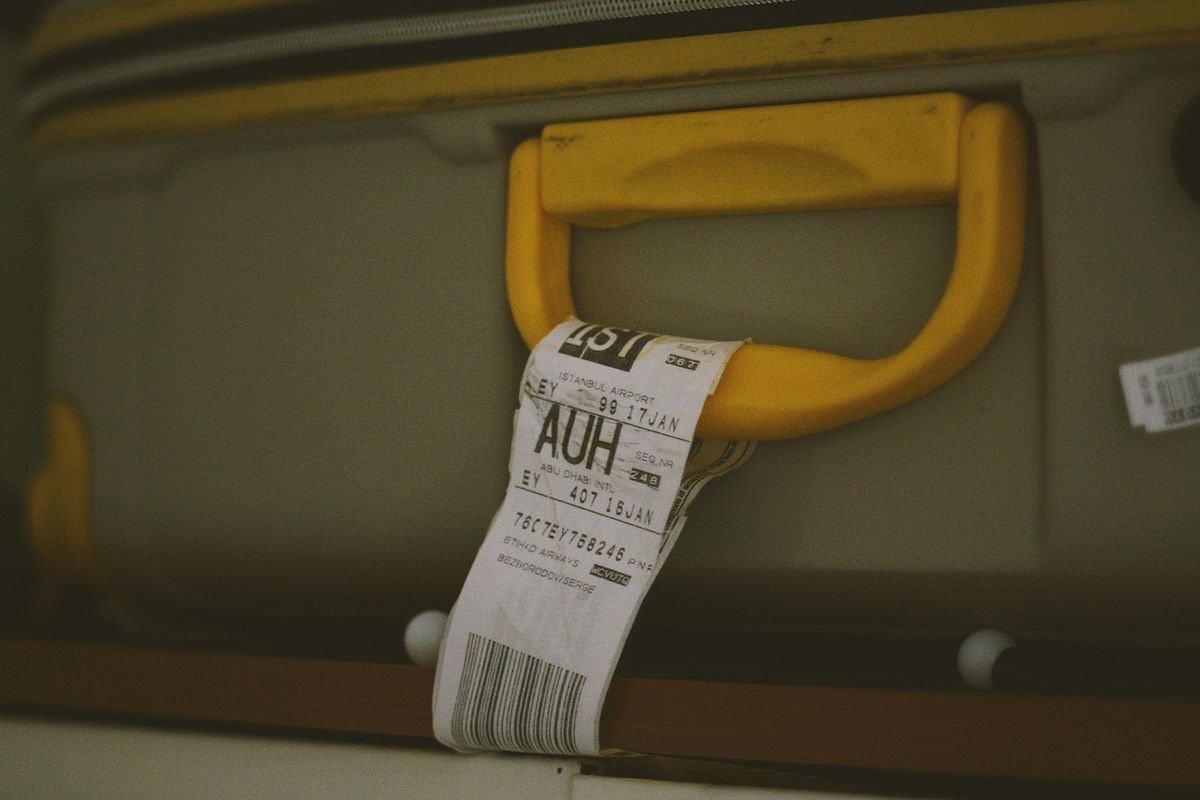
- Show your boarding pass and baggage tag receipt. The barcode number helps staff identify the bag.
- Describe the suitcase accurately: colour, size, brand, distinctive straps or stickers, and a photo if you have one.
- Give a delivery address where you will actually be during the next few days, plus a working phone number and email.
- Ask how to track progress, when to expect an update and who pays if you must collect the bag yourself.
If no desk is open, use the airline’s official baggage reporting channel immediately and save written confirmation. The reporting route matters most; do not rely only on telling a staff member in passing. If a tracker shows a location, pass that information to the airline, but remember a consumer tracker is a clue rather than a substitute for its tracing system.
What can you reasonably buy?
Most airlines will consider reimbursement for reasonable essentials while a checked bag is delayed away from home. Think basic toiletries, underwear, a change of clothes and laundry when needed. What is reasonable depends on the length of the delay, the climate, the purpose of your trip and what you had in hand luggage. It is not a free shopping spree, however tempting the airport boutique suddenly looks.
First evening
Toothbrush, toothpaste, basic toiletries and any clothing you genuinely need before the next day.
Longer delay
A practical change of clothes, laundry or destination-specific basics as the wait continues.
Every purchase
Keep dated, itemised receipts and note why the item was needed while the case was unavailable.
Ask the airline whether it supplies an emergency kit or sets a spending limit. If it gives you a daily allowance, request the policy in writing. Reimbursement may be lower when your bag is delayed on the journey home because you may have access to your own clothes and toiletries there. The CAA notes that airlines often cover bare essentials but assess claims individually.
For medication, essential medical items or baby supplies, ask the airline for urgent help immediately, and speak to a local pharmacist or clinician where appropriate. Keep prescription information and essential medication in cabin baggage when the airline and security rules permit; that is a useful precaution for future trips.

Keep your delivery details current
Use the PIR reference in the airline’s official tracing portal if it offers one. Check that the delivery address is right for your itinerary. If you are changing hotels, tell the airline before the case is dispatched and ask it to confirm the new address. Save each update or take a screenshot.
Ask whether the bag will be delivered to your accommodation and whether someone needs to be present to receive it. Do not arrange a long, expensive return trip to the airport without checking who will pay for it. If you must collect it, keep any transport receipt and ask the airline whether the cost is claimable.
Once the bag arrives, inspect it before treating the matter as finished. Photograph visible damage, check whether anything is missing and record the date and time of delivery. You may still be able to claim reasonable expenses caused by the delay even though the bag has come back.
The airport report is only the first step
Send a separate written claim to the airline using its official form or customer service process. Include the PIR, flight details, baggage tag, delivery date, a clear list of expenses and copies of receipts. Keep your original documents. State what happened and the amount you are requesting without inflating it.
| What happened | Key timing to check | What to keep |
|---|---|---|
| Bag delayed, then returned | CAA guidance says send the written claim within 21 days of receiving it. | PIR, delivery date and itemised essentials receipts. |
| Bag arrived damaged or items missing | Report promptly; CAA guidance gives seven days for a written claim. | Photos, baggage tag, purchase or repair evidence. |
| Bag has not arrived after 21 days | Contact the airline about a lost-baggage claim promptly; do not wait to report the original delay. | Bag description, inventory and proof of value. |
Rules depend on the route and applicable law, and airlines may publish their own claim instructions. The CAA states a 21-day period for a delayed-bag claim from receiving the delayed bag and seven days for damage or missing items. For a bag that remains missing, Citizens Advice says it is generally treated as lost after 21 days. The safest approach is to report immediately and start collecting evidence while the bag is being traced. See Citizens Advice’s baggage claim guide.
Airline liability has limits. An international convention may apply, but its limit is a ceiling, not an automatic payout. You will generally need to show the value and age of what was lost and the cost of essentials actually purchased. Avoid quoting a fixed sterling amount in your claim; conversion rates and applicable limits can change.
Damage and missing contents need their own evidence
When a suitcase arrives cracked, torn or unable to close, photograph it at the airport if possible. Report the damage to the airline promptly, request the PIR or written record, and keep the bag until the airline explains whether it needs inspection or a repair estimate. Make the written claim within the applicable deadline, which the CAA describes as seven days for damaged baggage.
For missing contents, list each item separately and provide any receipt, card statement, old photograph or other reasonable proof of ownership and value. Airlines may value used items according to their age rather than buying you brand-new replacements. Valuable, fragile or essential items are better carried in the cabin where permitted.
Normal wear, a pre-existing broken wheel and damage in transit are not the same thing. Describe what changed, when you first noticed it and what condition the case was in before the flight. Clear photos taken before departure can help if you happen to have them.
Should you use travel insurance instead?
Check your travel insurance policy as well as the airline process. The policy may have a baggage delay allowance, a limit per item, an excess and a deadline for telling the insurer. It may cover some losses differently from the airline. Notify the insurer promptly, ask which route makes sense and disclose any payment you receive from the airline; you cannot be paid twice for the same loss.
If the airline rejects a claim or offers much less than the documented loss, ask for its explanation in writing and respond with the missing evidence. You may be able to use an approved alternative dispute resolution scheme for the airline, or seek guidance from the CAA where appropriate. The CAA explains that airlines do not routinely reimburse every knock-on holiday expense caused by a late suitcase, so check your insurance terms before assuming a disrupted tour or cruise will be covered.
Keep one folder for the whole problem
- Boarding passes and baggage tag receipts.
- PIR number, emails and tracking screenshots.
- Photos of the suitcase and any damage.
- Itemised receipts for essential purchases.
- Inventory and evidence of value for lost contents.
- Delivery confirmation and copies of the written claim.
Pack for a delay without packing for disaster
I would not spend an entire holiday expecting my bag to disappear. I would put one change of clothes, permitted medication, chargers and essentials in cabin baggage, then keep the baggage tag until I am reunited with the case. If travelling as a family, spreading a few essentials between cases can help if one goes missing.
Take a quick photo of the suitcase and its contents before closing it. Remove old routing tags, make your contact details visible without exposing unnecessary personal information, and keep valuable items and important documents with you in line with cabin rules. None of this guarantees the case will follow you. It simply makes the first 24 hours easier if it decides to take the scenic route.
Get the reference, then get on with your holiday
A delayed suitcase is a nuisance, but it does not have to swallow the whole trip. Report it at the airport, buy sensible essentials, save the receipts and follow up with a written claim. I would rather spend my holiday taking photographs of the destination than trying to remember the barcode on a missing bag.



